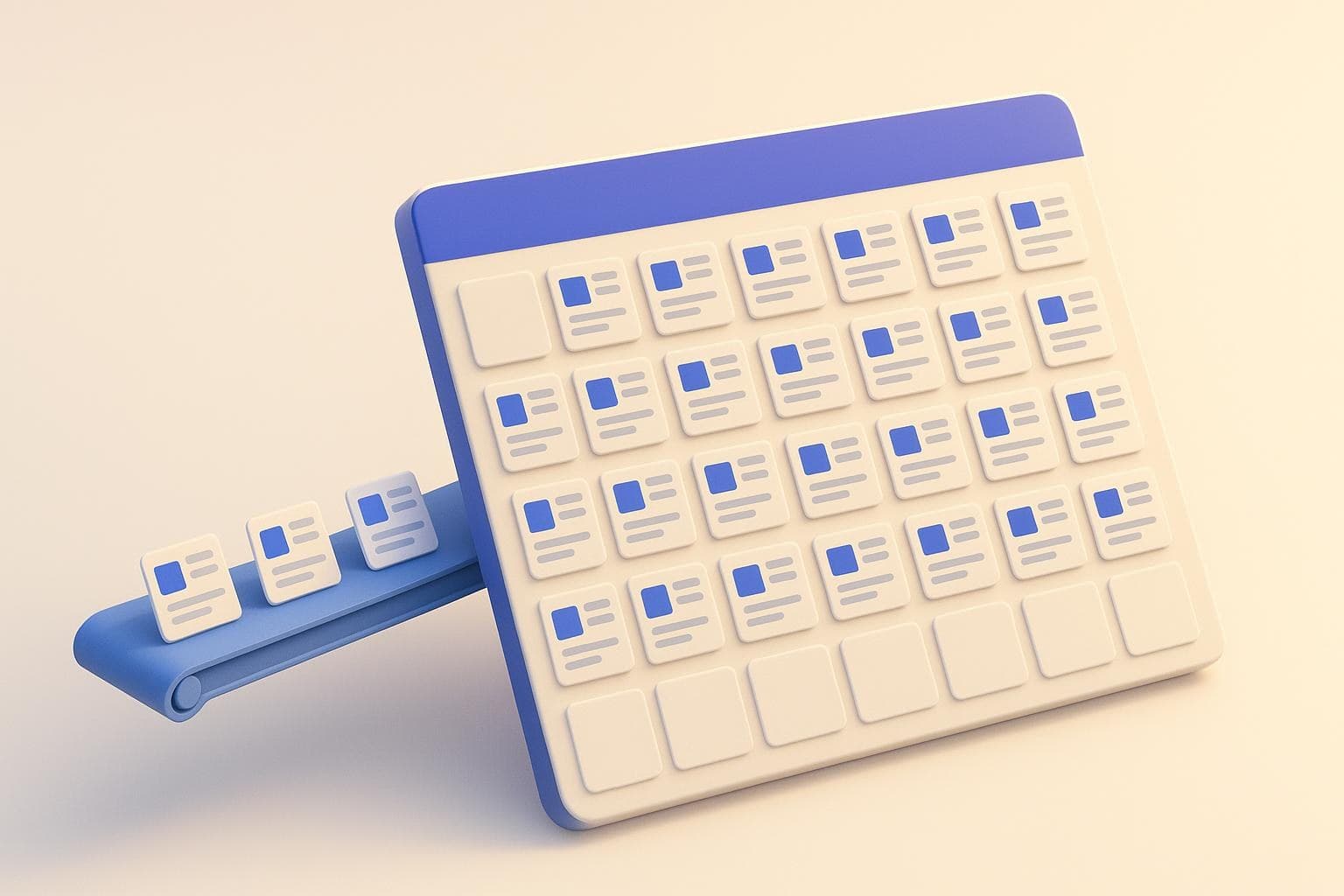
Every year the industry publishes best-time-to-post charts, and every year operators discover the same caveat: the best time to post is when your audience is awake and scrolling, and your audience is not the average. For a portfolio, the problem multiplies. Twenty pages can mean five audience time zones, and a schedule that is perfect for one page is midnight for another.
What the data does agree on
Across studies, weekday mid-mornings through early afternoons in the audience's local time perform reliably, with engagement building through midweek. Very early mornings and late nights underperform for most page types. Entertainment content stretches later into the evening, news performs earlier.
Treat these as starting defaults, not answers. Your page-level data outranks any industry chart within a few weeks of consistent posting.
The portfolio approach
- Set each page's time zone to its audience's zone, not your office's. Every scheduling decision inherits this.
- Use consistent intervals so posts space themselves through the audience's day automatically.
- Check audience geography quarterly. Pages drift, especially after viral spikes bring in new regions.
- Test one variable at a time. Shift a page's window by two hours for two weeks and compare reach per post.
Why per-page settings beat per-post decisions
Choosing a time for every individual post is a decision your team makes thousands of times a year, badly, under deadline. Setting a time zone and an interval once per page is a decision you make twenty times ever. Feedrevo schedules every queued post inside the page's own local-time rules, so bulk uploads land correctly in Karachi, Kansas, and Copenhagen without anyone doing arithmetic.
Run your pages the way this post describes
Feedrevo gives you bulk scheduling, approvals, revenue tracking, and page health in one dashboard. Your first three pages are free.
Get started free